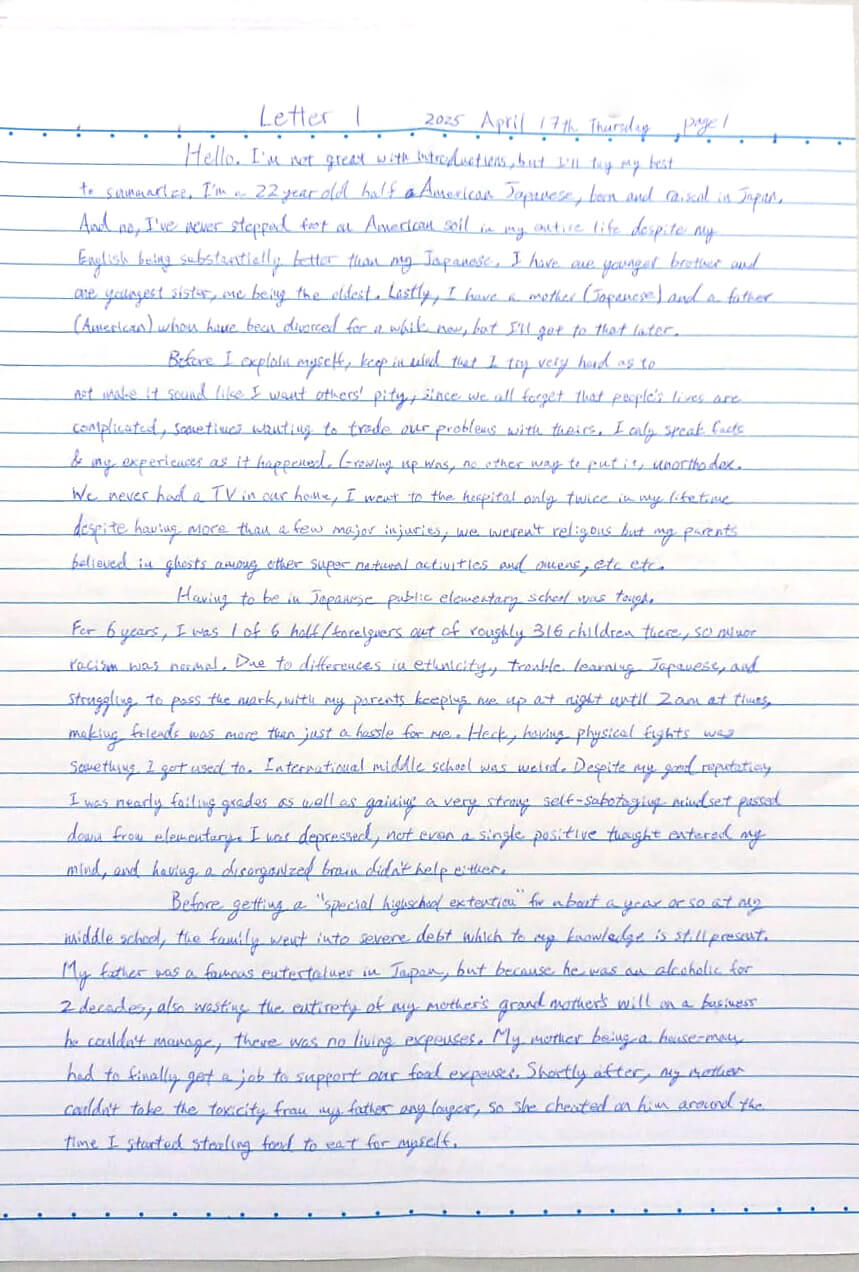
I’m 22, half American and half Japanese, and was born and raised in Japan. I’ve never been to the U.S., despite speaking English much better than Japanese. I’m the oldest of three, with a younger brother and sister. My Japanese mother and American father divorced years ago; I’ll explain more later.
I’m not sharing this to make anyone feel sorry for me, but because people’s lives are complicated, and we sometimes wish we could trade problems. These are simply the facts and experiences as they happened. Growing up was unorthodox: we had no TV, I went to the hospital only twice despite several serious injuries, and although we weren’t religious, my parents believed in ghosts, supernatural activity, and omens.
Japanese public elementary school was tough. I was one of six half-foreign students among about 316 children, so minor racism was normal. My ethnicity, difficulty with Japanese, and pressure to pass made friendship hard. My parents sometimes kept me up until 2 a.m. to study, and I grew used to physical fights. International middle school was strange. Despite its good reputation, I nearly failed, and the self-sabotaging mindset I’d developed in elementary school persisted. I was depressed, unable to think positively, and struggled with a disorganized brain.
Before spending about a year in a “special high school extension” at my middle school, my family fell deeply into debt, which I believe remains. My father, a famous entertainer in Japan, had been an alcoholic for two decades and spent my maternal great-grandmother’s inheritance on a business he couldn’t manage. We had no money for living expenses, so my mother, formerly a homemaker, got a job. Soon after, unable to handle my father’s toxicity, she cheated on him. Around then, I began stealing food.
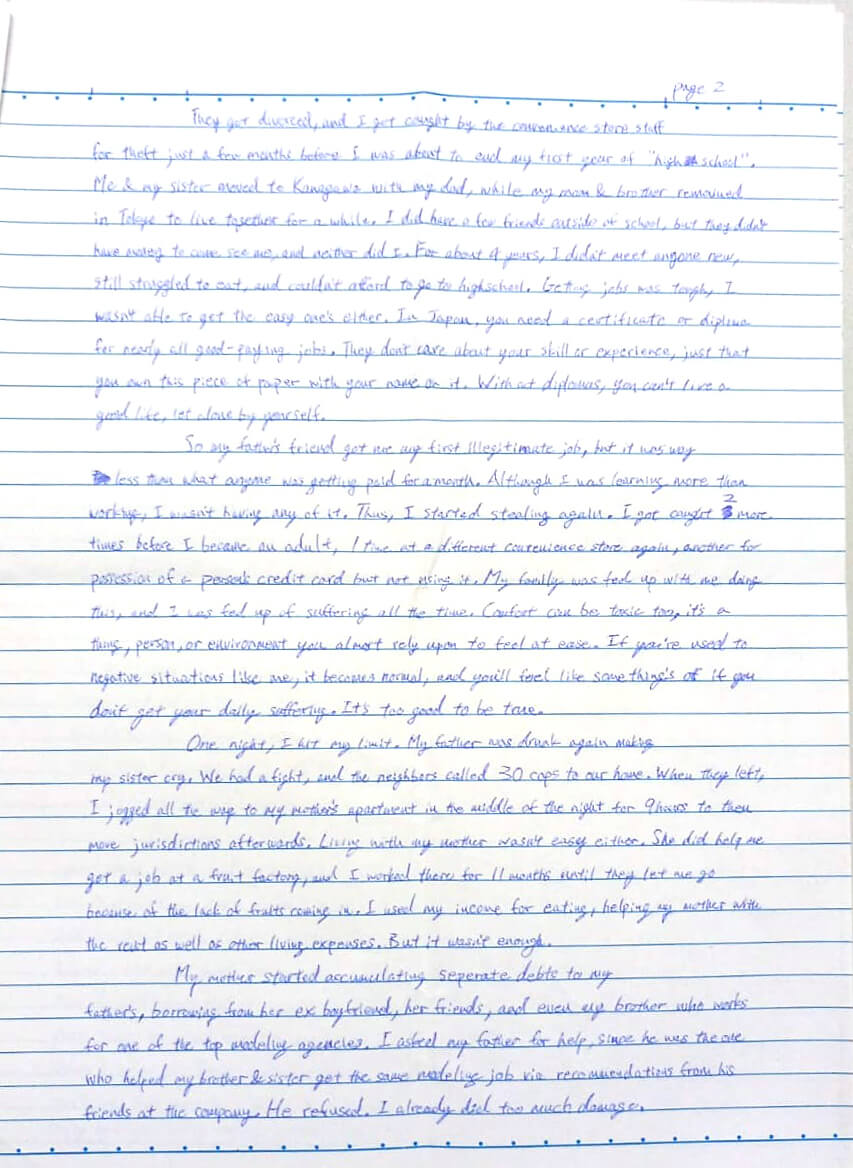
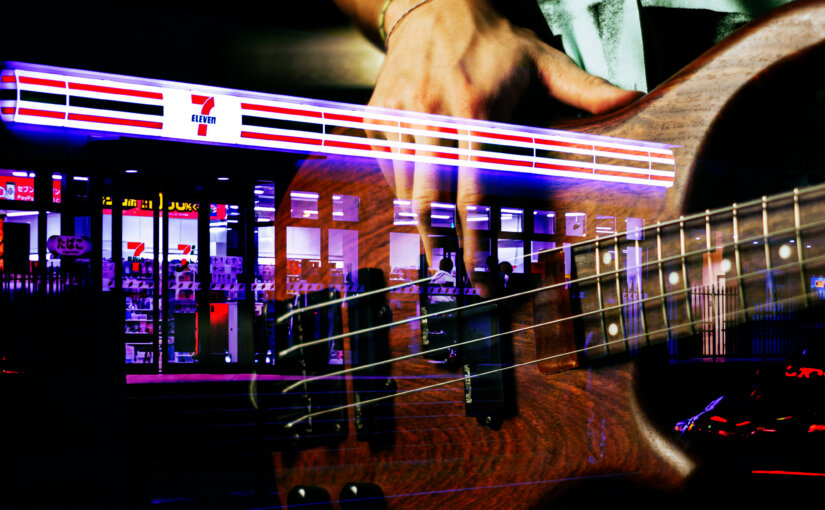
My parents divorced. A few months before I was due to finish my first year of “high school,” convenience store staff caught me stealing. My sister and I moved to Kanagawa with my father, while my mother and brother stayed in Tokyo. I had friends outside school, but neither they nor I could afford to visit. For about four years, I met no one new, struggled to eat, and couldn’t afford high school. Finding work was difficult; even easy jobs were out of reach. In Japan, most well-paying jobs require a certificate or diploma. Employers value that piece of paper over skills or experience, and without one, it’s hard to live well—or independently.
My father’s friend found me my first illegitimate job, but it paid far less than others earned in a month. I was learning more than working and couldn’t take it anymore, so I started stealing again. Before adulthood, I was caught twice more: once at another convenience store and once for possessing someone’s credit card, which I didn’t use. My family was fed up with my stealing, and I was tired of suffering. Comfort can be toxic, too: it can be a thing, person, or environment you rely on. When negative situations feel normal, you can feel something is wrong without your daily dose of suffering—as if anything better is too good to be true.
One night, I hit my limit. My father was drunk and making my sister cry. We fought, and the neighbors called 30 police officers. After they left, I jogged for nine hours through the night to reach my mother’s apartment, then moved jurisdictions. Living with her wasn’t easy either. She helped me get a job at a fruit factory, where I worked 11 months before being let go because too little fruit was coming in. I spent my income on food and helped with rent and other expenses, but it wasn’t enough.
A friend found me a job I knew was risky: pick up a suitcase in Thailand and take it to Hong Kong. I wasn’t told what was inside or how much there was. It was my first time flying alone.
My mother took on debts of her own, borrowing from her ex-boyfriend, friends, and even my brother, who worked for a top modeling agency. I asked my father for help; he’d helped my brother and sister get modeling jobs through company contacts, but he refused. I’d already done too much damage.
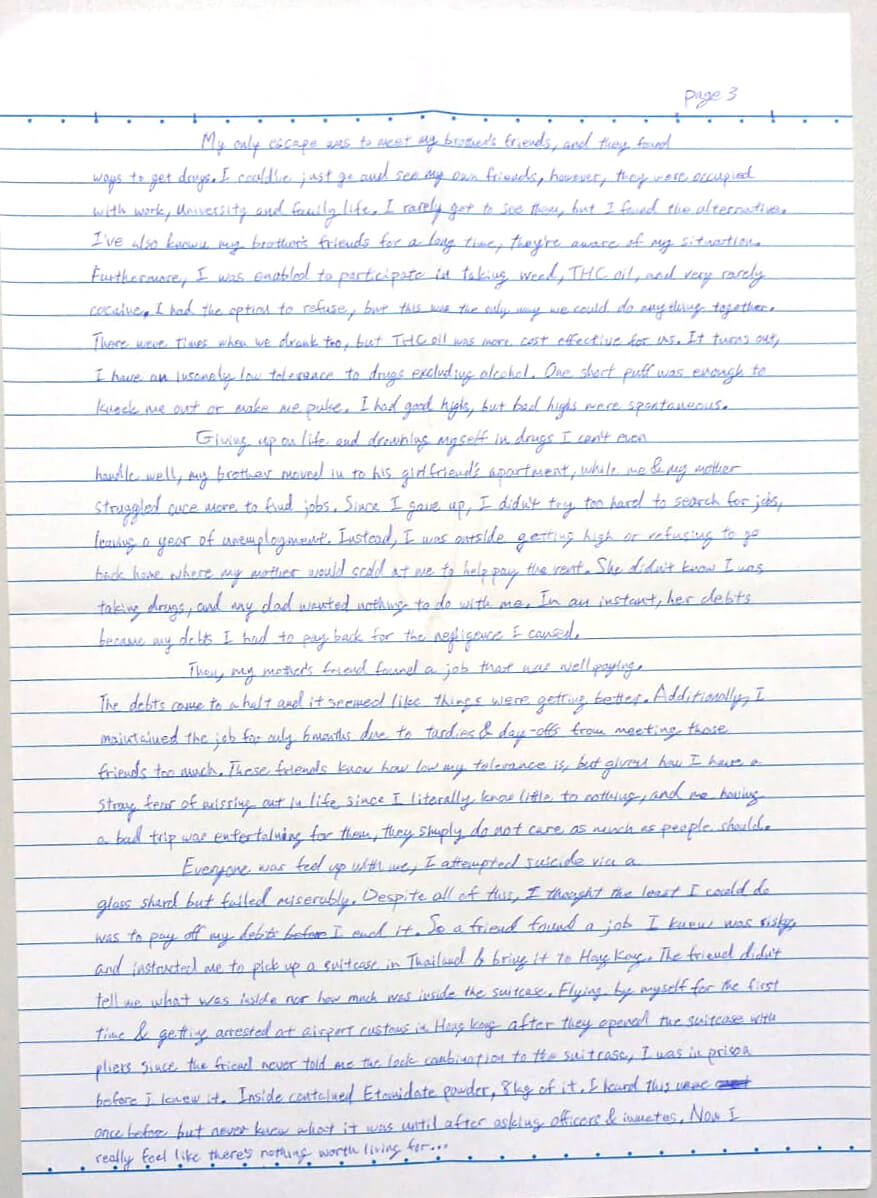
My only escape was spending time with my brother’s friends, who found drugs. My own friends were busy with work, university, and family, so I rarely saw them. My brother’s friends knew my situation. I started using weed and THC oil, and very rarely, cocaine. I could have refused, but it felt like the only way to spend time together. We sometimes drank, too, but THC oil was cheaper. I had an extremely low tolerance for drugs, unlike alcohol: one short puff could knock me out or make me puke. Sometimes I had good highs, but the bad ones came suddenly.
I’d given up on life, drowning myself in drugs I couldn’t handle. My brother moved in with his girlfriend, while my mother and I struggled to find work again. I spent a year unemployed, barely looking for jobs; instead, I got high outside or avoided going home because my mother scolded me for not helping with rent. She didn’t know about the drugs, and my father wanted nothing to do with me. Suddenly, my mother’s debts were mine, too. I had to repay the damage I’d caused through negligence.
Then a friend of my mother’s found me a well-paying job. The debts stopped growing, and things seemed better. But after six months, I lost it because I was often late and took days off to meet those friends. They knew how low my tolerance was, but I feared missing out on life after knowing so little. My bad trips entertained them, and they didn’t care as much as people should.
Everyone was fed up with me. I tried to kill myself with a glass shard but failed. Despite everything, I thought I should at least pay off my debts first. A friend found me a job I knew was risky: pick up a suitcase in Thailand and take it to Hong Kong. I wasn’t told what was inside or how much there was. It was my first time flying alone. At Hong Kong airport, customs officers opened the suitcase with pliers; my friend hadn’t given me the lock combination. I was arrested and taken to prison. It contained 8 kg of etomidate powder. I’d heard the name but didn’t know what it was until I asked officers and inmates. Now I really feel like there’s nothing worth living for…
Life in prison
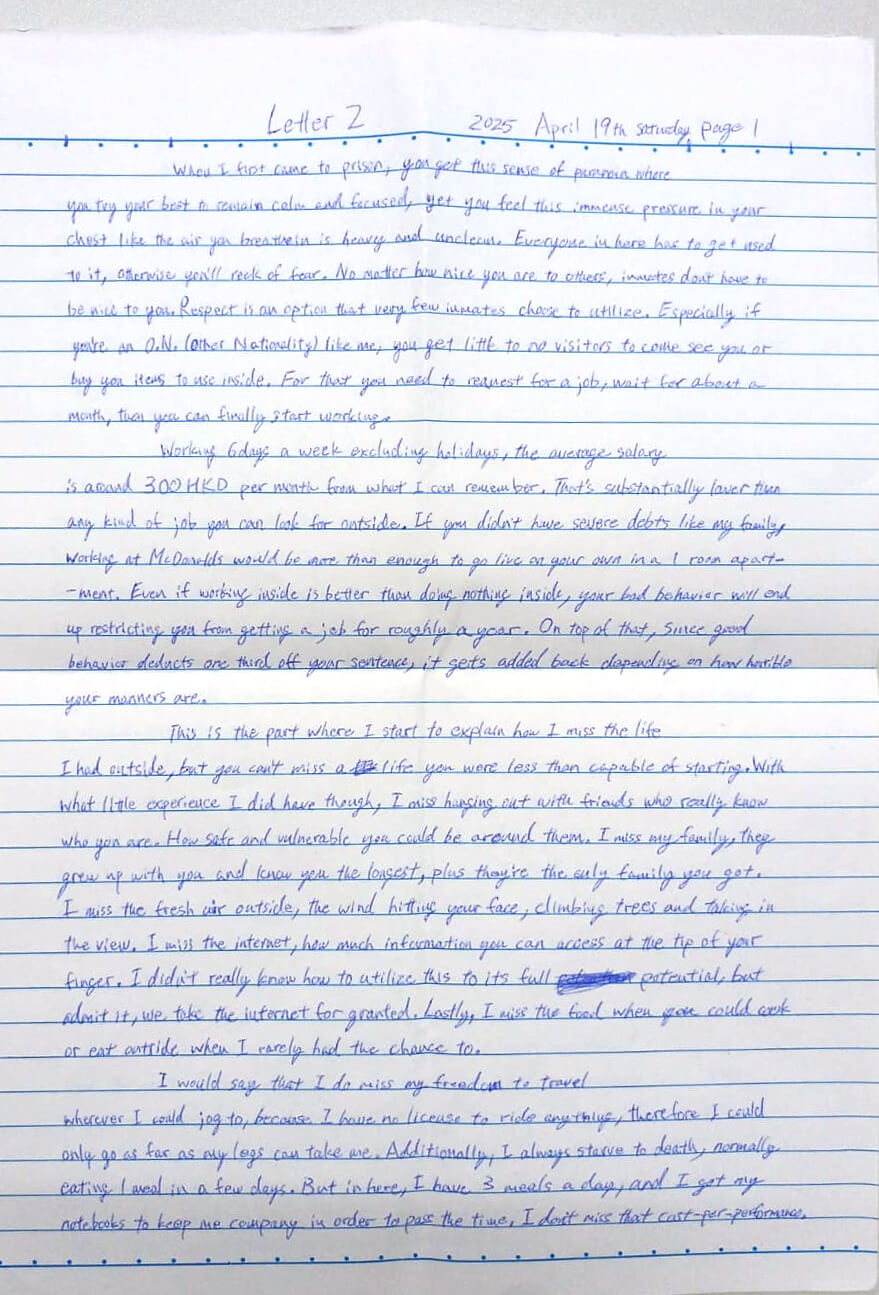
When I first came to prison, I felt paranoid. I tried to stay calm, but pressure weighed on my chest, as if the air were heavy and unclean. Everyone has to get used to it, or they’ll reek of fear. No matter how nice you are, other inmates may not be. Respect is a choice few make. As an O.N. (Other Nationality), I get few, if any, visitors to see me or buy things for me. I had to request a job and wait about a month to start working.
I worked six days a week, excluding holidays, for around 300 HKD a month on average, as I remember it—far less than almost any job outside. If my family hadn’t been in severe debt, a McDonald’s job could have paid enough to live alone in a one-room apartment. Working inside is better than doing nothing, but bad behavior can bar you from a job for roughly a year. Good behavior takes a third off your sentence, though bad behaviour can add that time back.
Now I’m stuck with strangers in a country whose language I can’t speak, without privacy…, and where lowering your guard is too dangerous. There’s nothing you can do; that’s how things are.
I miss the life I had outside, though I couldn’t build one. With my limited experience, I miss friends who know me and the safety to be vulnerable with them. I miss my family, who grew up with me, have known me longest, and are all I have. I miss fresh air, wind on my face, climbing trees, and the view. I miss the internet and its wealth of information. I didn’t use it to its full potential, but we take it for granted. I also miss cooking or eating out, which I rarely did.
I miss being free to travel as far as I could jog. Without a license, I could only go as far as my legs carried me. I was always starving, usually eating once every few days. Here, I get three meals a day and have notebooks for company. I don’t miss that trade-off.
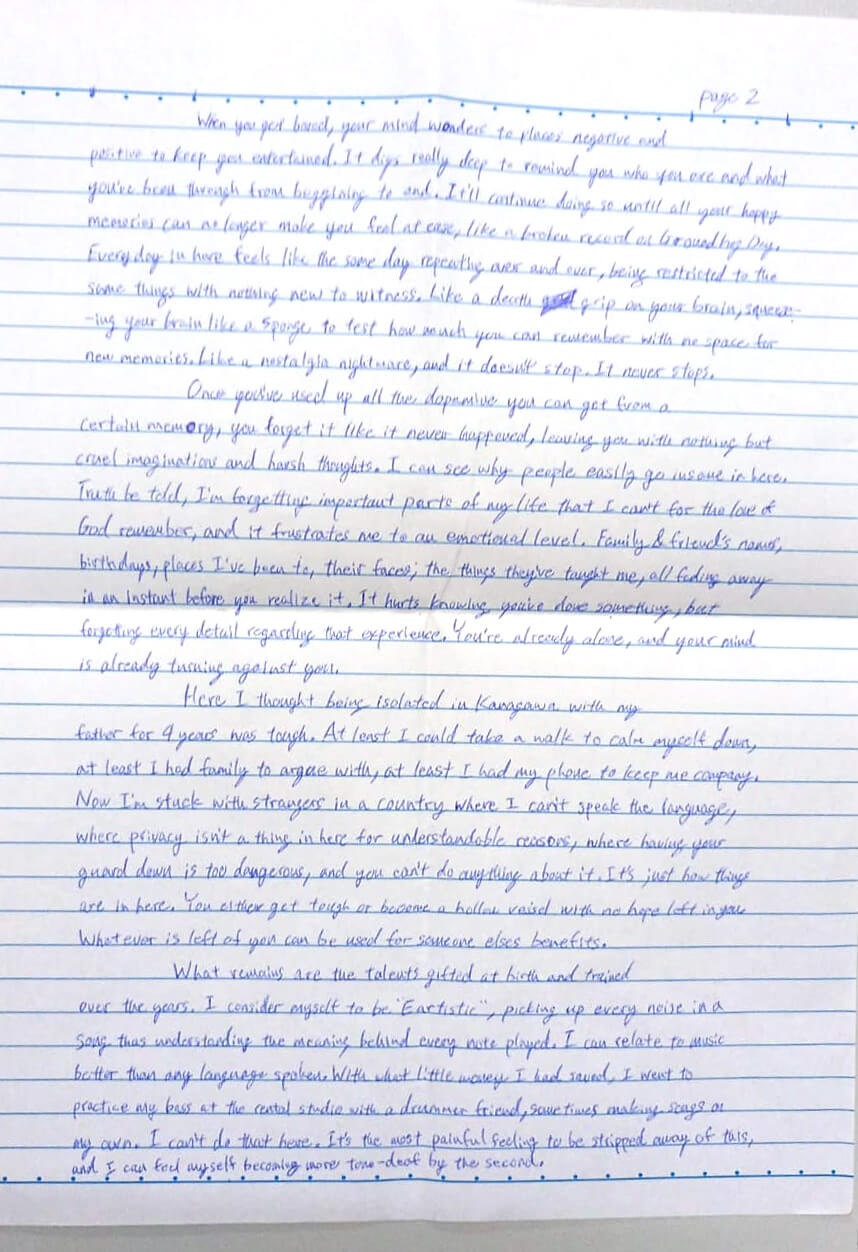
When bored, my mind wanders through good and bad memories for entertainment. It digs deep, reminding me who I am and what I’ve endured, from beginning to end. It keeps going until happy memories bring no peace, like a broken record. Every day feels the same, with nothing new to witness. It’s a death grip squeezing your brain like a sponge, testing what you can remember while leaving no room for new memories—a nostalgic nightmare that never stops.
Once a memory has given all the dopamine it can, you forget it as if it never happened, left with cruel imaginings and harsh thoughts. I understand why people go insane here. I’m forgetting important parts of my life, and it deeply frustrates me. Family and friends’ names and birthdays, places I’ve been, their faces, and what they taught me—all fade before I realize it. It hurts to know you did something but forget every detail. You’re already alone, and your mind is turning against you.
Being isolated in Kanagawa with my father for four years was tough. At least I could walk to calm down, argue with family, and use my phone for company. Now I’m stuck with strangers in a country whose language I can’t speak, without privacy for understandable reasons, and where lowering your guard is too dangerous. There’s nothing you can do; that’s how things are. You either get tough or become a hollow vessel without hope, whatever remains of you available for someone else’s benefit.
All I have left are the talents I was born with and developed. I consider myself “Eartistic”: I pick up every sound in a song and understand the meaning behind each note. I relate to music better than spoken language. With my little savings, I practiced bass at a rental studio with a drummer friend and sometimes wrote songs alone. I can’t do that here. Losing this is most painful, and I feel myself becoming more tone-deaf by the second.
Reflexion
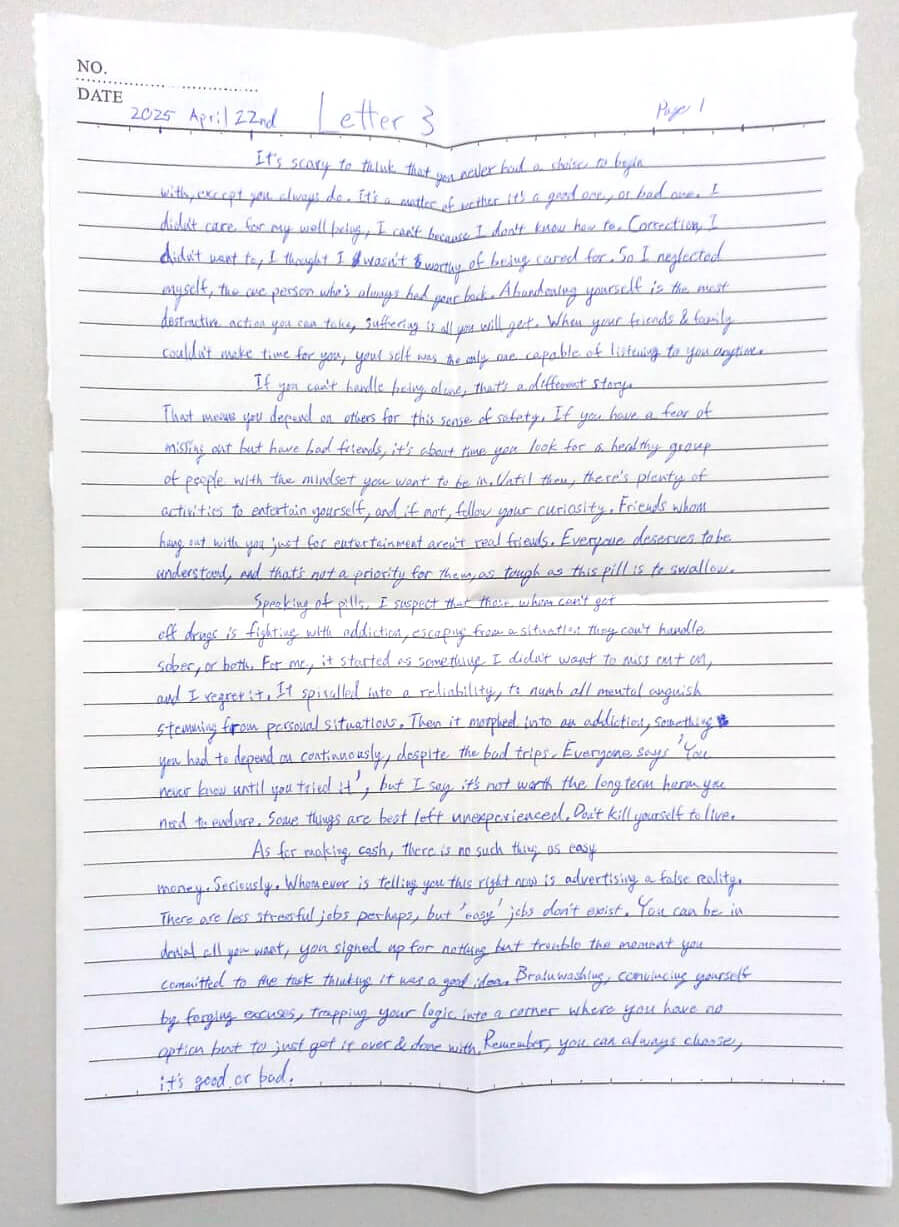
It’s scary to think you never had a choice, yet you always do—a good one or a bad one. I neglected my well-being because I thought I wasn’t worthy of care. In doing so, I abandoned the one person who always had my back. When friends and family couldn’t listen, I could have listened to myself.
If being alone feels unbearable, you may depend on others for safety. If you fear missing out but your friends aren’t good for you, seek people with the mindset you want. Until then, find activities or follow your curiosity. Friends who hang out only for entertainment aren’t real friends; everyone deserves to be understood.
People who can’t stop using drugs may be fighting addiction, escaping pain, or both. I started because I didn’t want to miss out, then relied on it to numb distress. Eventually it became an addiction, despite the bad trips. “You never know until you try” isn’t always wise. Some experiences aren’t worth the long-term harm. Don’t kill yourself to live.
There’s no such thing as easy money; promises of it sell a false reality. Some jobs are less stressful, but every commitment brings challenges. Denial and excuses can trap you into thinking you have no choice but to finish. Remember: you can choose, for better or worse.
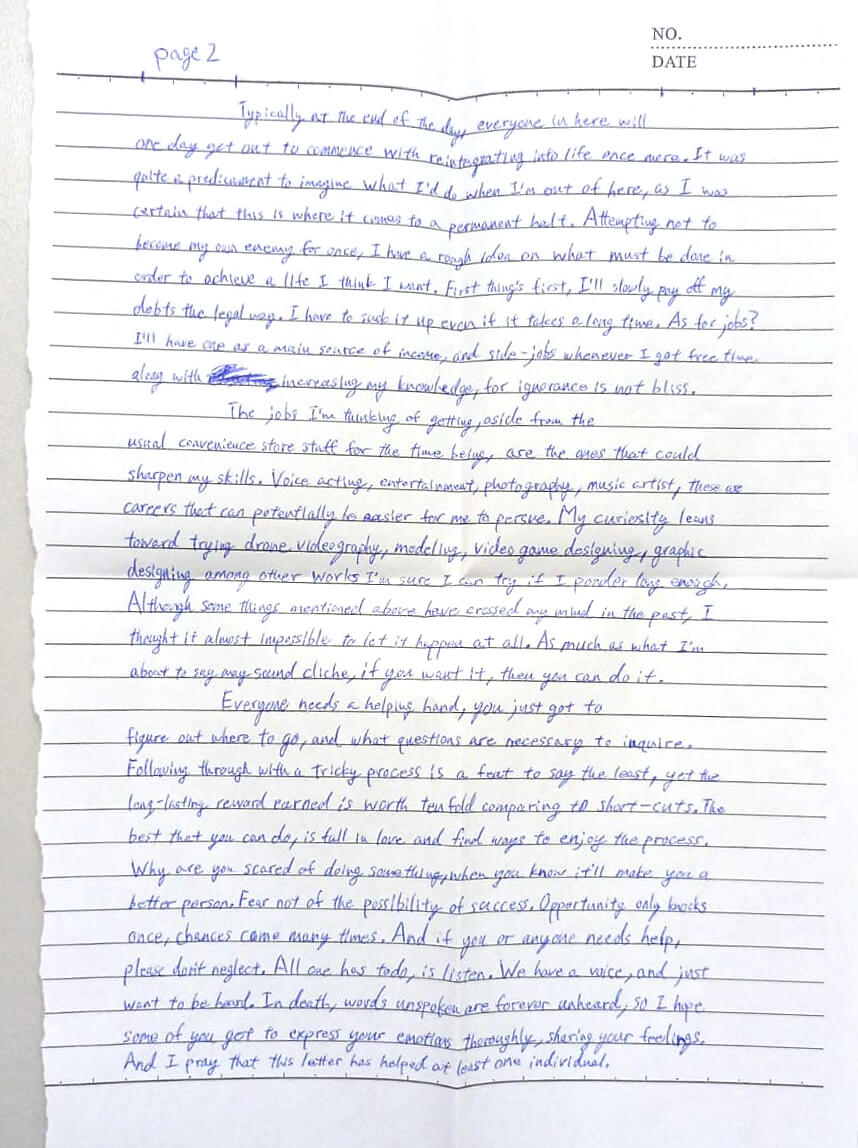
One day, everyone here will leave and begin rebuilding life. I once thought my life would end here, but now I have a rough plan: repay my debts legally, however long it takes; work a main job with side jobs when possible; and keep learning. Ignorance isn’t bliss.
Beyond convenience-store work, I want jobs that build skills: voice acting, entertainment, photography, or music. I’m also curious about drone videography, modeling, game and graphic design, and other possibilities. I once thought these goals were impossible, but if you want something, you can work toward it.
Everyone needs help; find where to go and what to ask. Difficult processes can bring lasting rewards, so learn to enjoy them. Don’t fear doing what could help you grow—or the possibility of success. Opportunity may come more than once. If someone needs help, listen; we all want to be heard. Unspoken words die with us. I hope you can express your feelings, and that this letter helps someone.
Note: This letter has been edited and it’s a combination of three separate letters. Original letters are in the image gallery below