
MY STORY
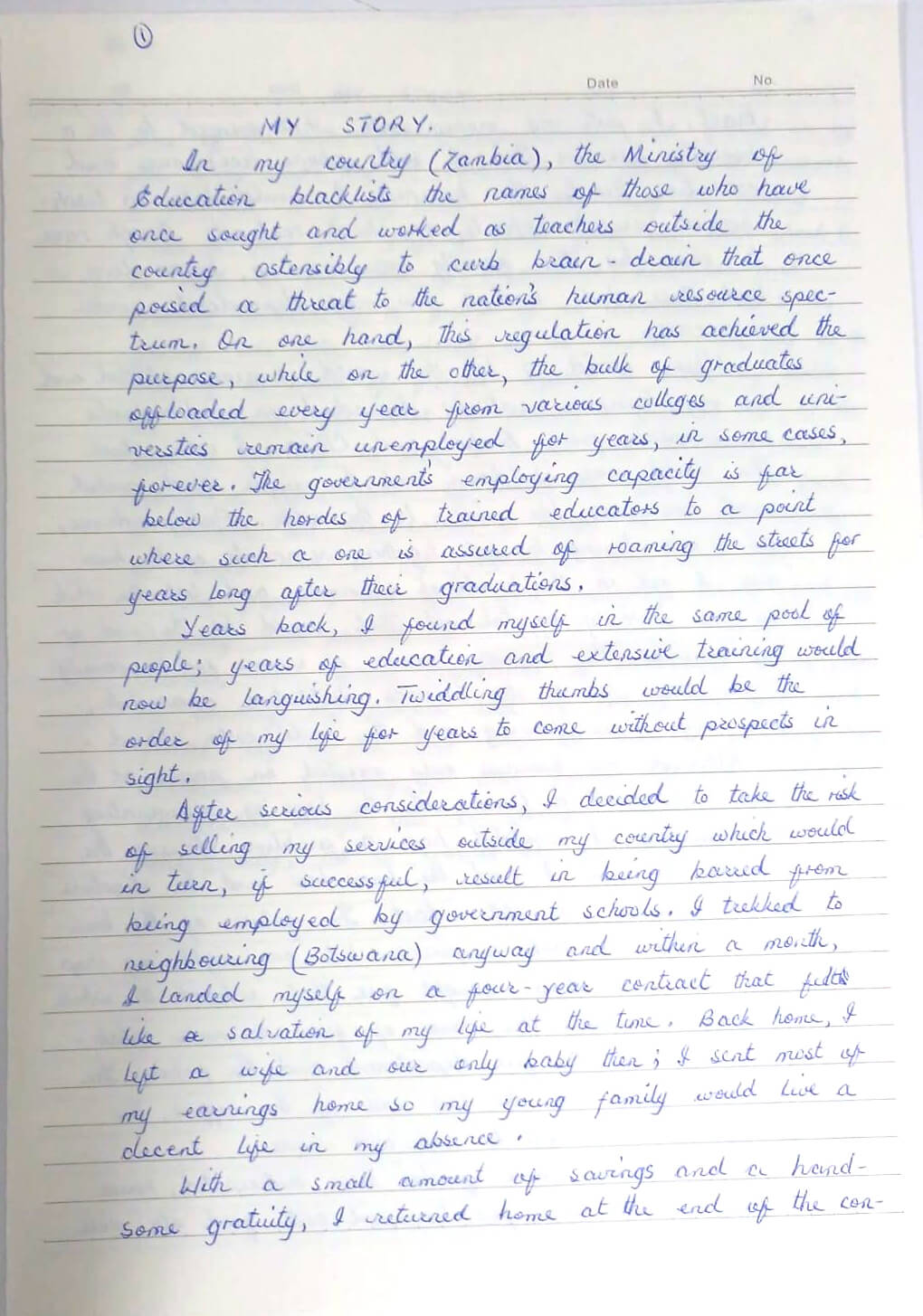
In my country (Zambia), the Ministry of Education blacklists the names of those who have once sought and worked as teachers outside the country, ostensibly to curb the “brain drain” that once posed a threat to the nation’s human resource spectrum. On one hand, this regulation has achieved its purpose, while on the other, the bulk of graduates offloaded every year from various colleges and universities remain unemployed for years—in some cases, forever. The government’s employing capacity is far below the hordes of trained educators, to a point where such a person is assured of roaming the streets for years long after their graduation.
Years back, I found myself in the same pool of people: years of education and extensive training would now be languishing. Twiddling thumbs would be the order of my life for years to come, without prospects in sight.
After serious consideration, I decided to take the risk of selling my services outside my country, which would in turn, if successful, result in being barred from being employed by government schools. I trekked to neighbouring Botswana anyway, and within a month, I landed myself a four-year contract that felt like the salvation of my life at the time. Back home, I left a wife and our only baby then; I sent most of my earnings home so my young family would live a decent life in my absence.
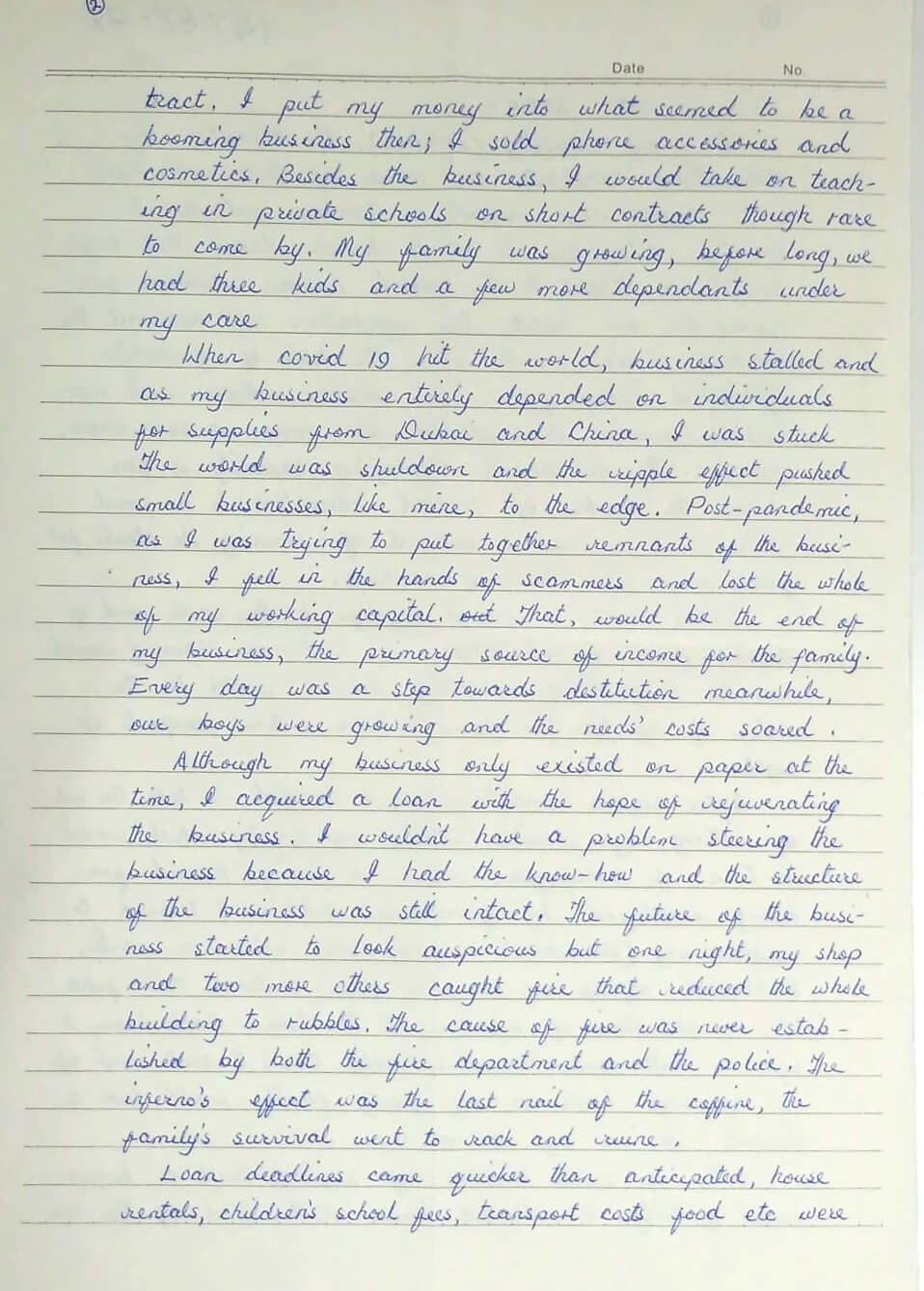
With a small amount of savings and a handsome gratuity, I returned home at the end of the contract. I put my money into what seemed to be a booming business then; I sold phone accessories and cosmetics. Besides the business, I would take on teaching in private schools on short contracts, though these were rare to come by. My family was growing; before long, we had three kids and a few more dependents under my care.
When COVID-19 hit the world, business stalled, as my business entirely depended on individuals for supplies from Dubai and China. I was stuck. The world was in shutdown, and the ripple effect pushed small businesses like mine to the edge. Post-pandemic, as I was trying to put together the remnants of the business, I fell into the hands of scammers and lost the whole of my working capital. That would be the end of my business—the primary source of income for the family. Every day was a step towards destitution; meanwhile, our boys were growing and the costs of their needs soared.
In the midst of desperation, destitution, and growing uncertainty, a friend of mine introduced me to his friend, who later introduced me to another.
Although my business only existed on paper at the time, I acquired a loan with the hope of rejuvenating the business. I wouldn’t have a problem steering the business because I had the know-how and the structure of the business was still intact. The future of the business started to look auspicious, but one night, my shop and two others caught fire, reducing the whole building to rubble. The cause of the fire was never established by either the fire department or the police. The inferno’s effect was the last nail in the coffin; the family’s survival went to rack and ruin.
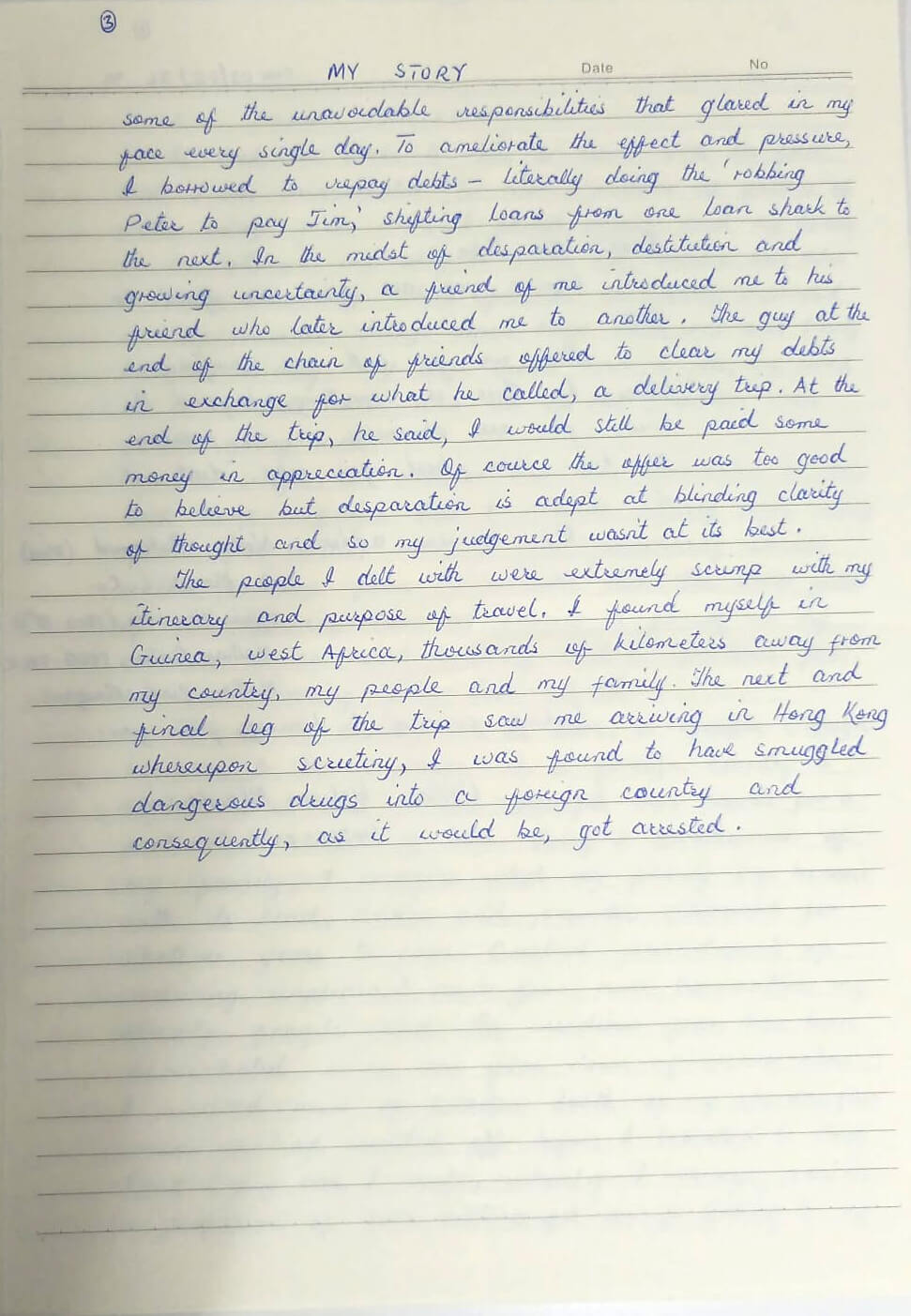
Loan deadlines came quicker than anticipated. House rental, children’s school fees, transport costs, food, etc., were some of the unavoidable responsibilities that glared in my face every single day. To ameliorate the effect and pressure, I borrowed to repay debts—literally “robbing Peter to pay Paul”—shifting loans from one loan shark to the next. In the midst of desperation, destitution, and growing uncertainty, a friend of mine introduced me to his friend, who later introduced me to another. The guy at the end of the chain of friends offered to clear my debts in exchange for what he called a “delivery trip.” At the end of the trip, he said, I would still be paid some money in appreciation. Of course, the offer was too good to believe, but desperation is adept at blinding clarity of thought, and so my judgement wasn’t at its best.
The people I dealt with were extremely secretive with my itinerary and purpose of travel. I found myself in Guinea, West Africa, thousands of kilometres away from my country, my people, and my family. The next and final leg of the trip saw me arriving in Hong Kong, whereupon scrutiny, I was found to have smuggled dangerous drugs into a foreign country and, consequently, as it would be, got arrested.
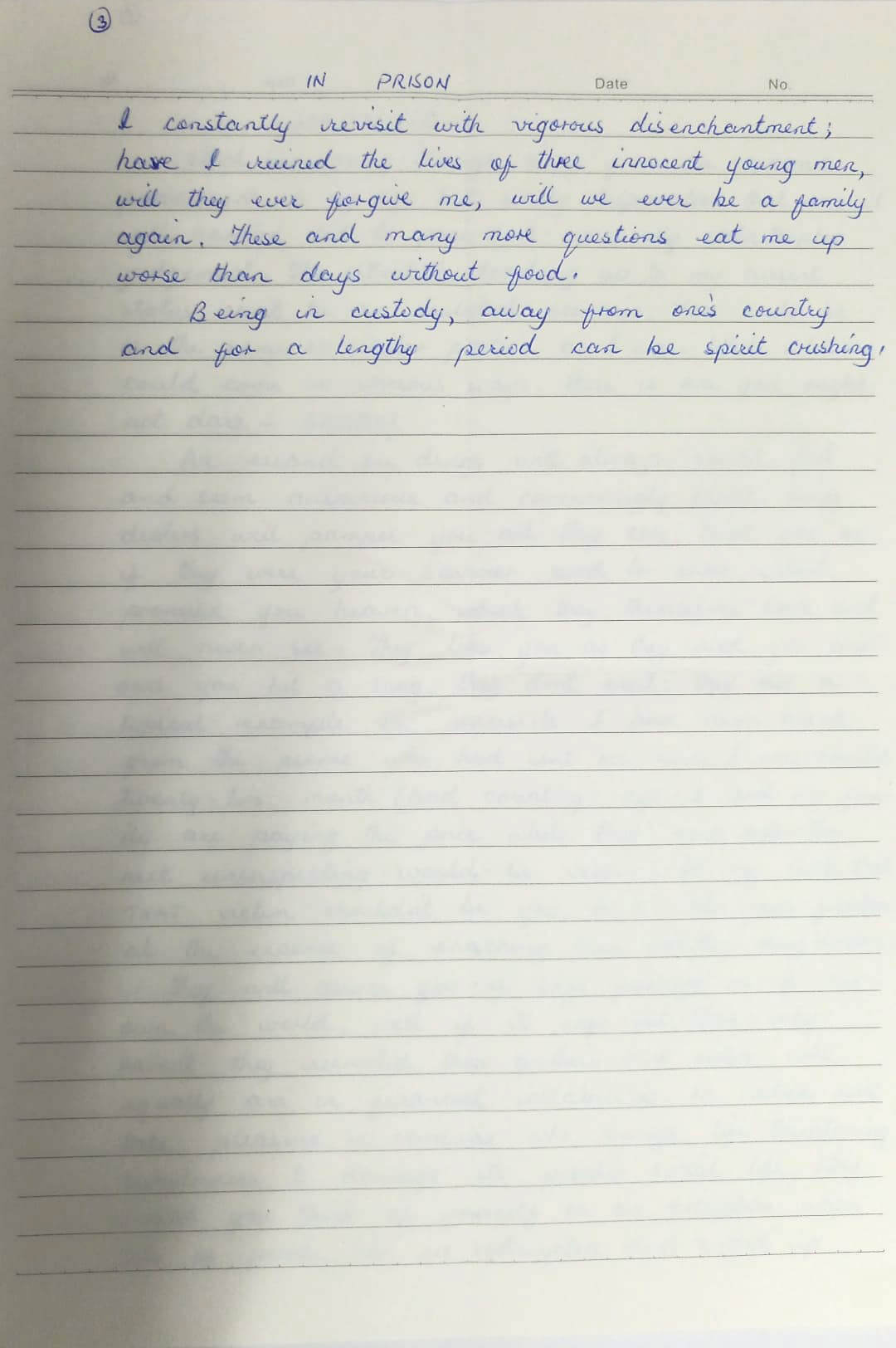
IN PRISON
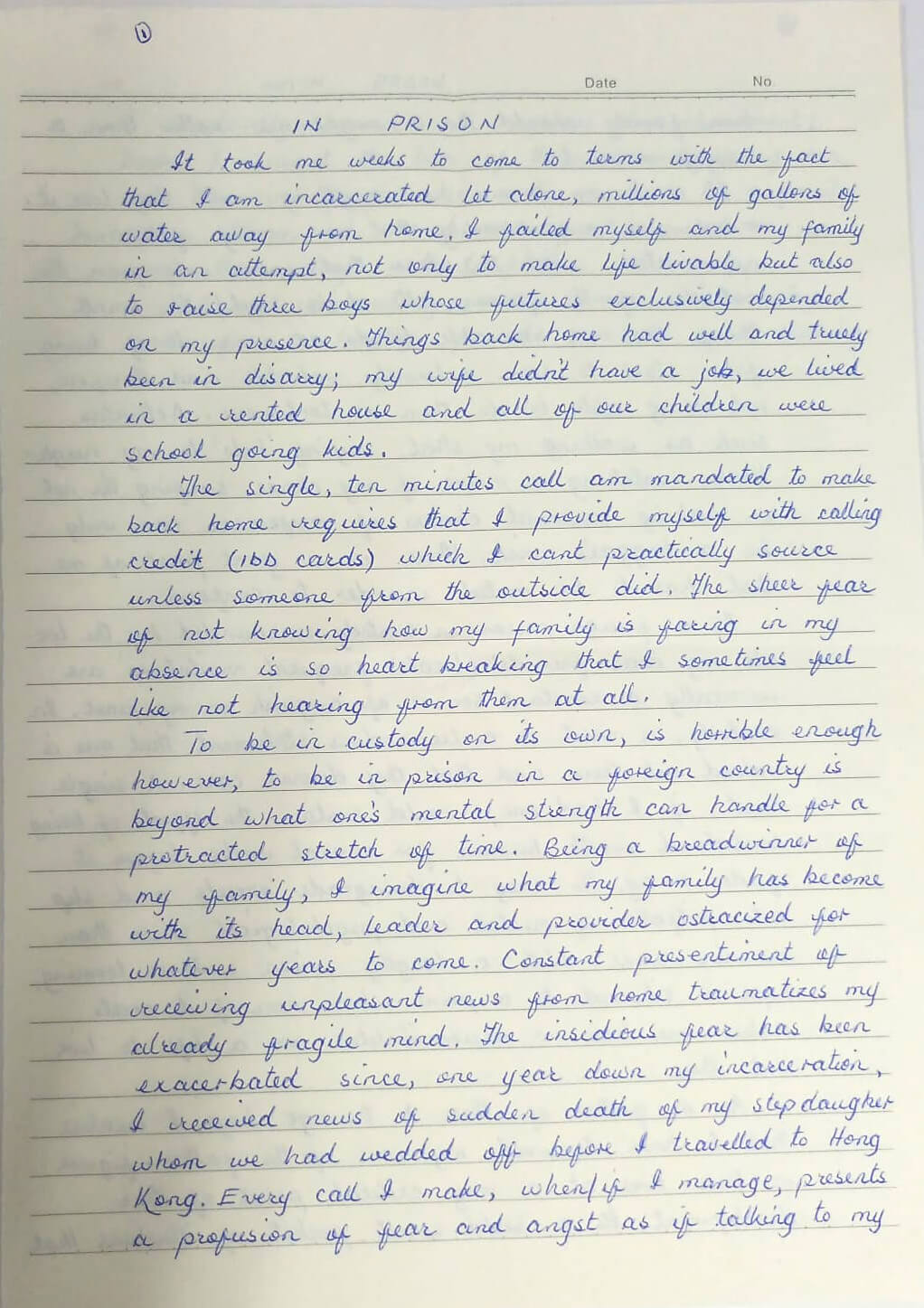
It took me weeks to come to terms with the fact that I am incarcerated, let alone millions of gallons of water away from home. I failed myself and my family in an attempt not only to make life livable, but also to raise three boys whose futures exclusively depended on my presence. Things back home had well and truly been in disarray; my wife didn’t have a job, we lived in a rented house, and all of our children were school-going kids.
The single, ten-minute call I am mandated to make back home requires that I provide myself with calling credit (IDD cards), which I can’t practically source unless someone from the outside does. The sheer fear of not knowing how my family is faring in my absence is so heartbreaking that I sometimes feel like not hearing from them at all.
The constant presentiment of receiving unpleasant news from home traumatizes my already fragile mind.
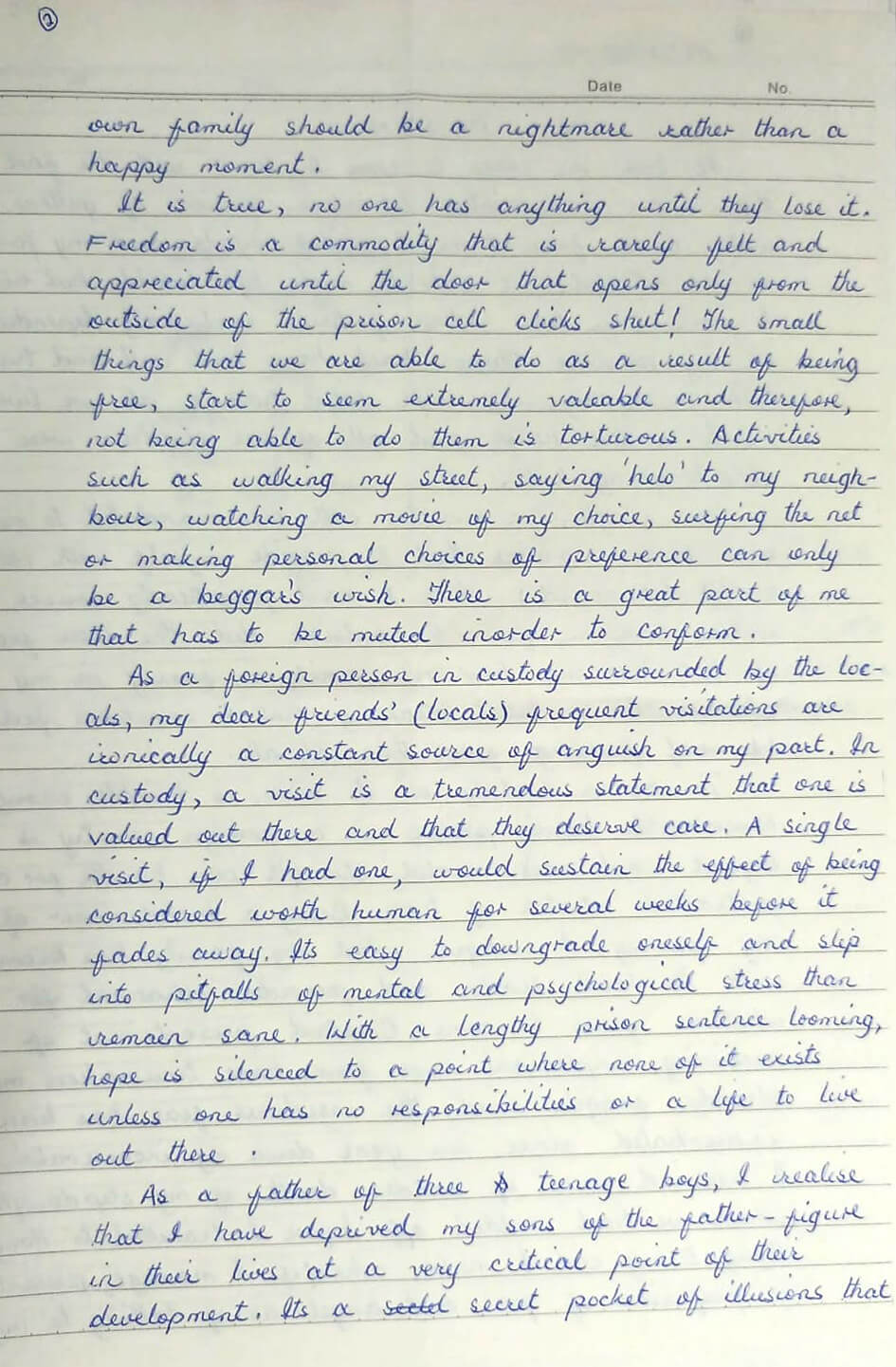
To be in custody on its own is horrible enough; however, to be in prison in a foreign country is beyond what one’s mental strength can handle for a protracted stretch of time. Being a breadwinner for my family, I imagine what my family has become with its head, leader, and provider ostracized for whatever years to come. The constant presentiment of receiving unpleasant news from home traumatizes my already fragile mind. The insidious fear has been exacerbated since, one year down into my incarceration, I received news of the sudden death of my stepdaughter, whom we had wedded off before I travelled to Hong Kong. Every call I make, when or if I manage, presents a profusion of fear and angst, as if talking to my own family should be a nightmare rather than a happy moment.
It is true: no one values anything until they lose it. Freedom is a commodity that is rarely felt and appreciated until the door that opens only from the outside of the prison cell clicks shut! The small things that we are able to do as a result of being free start to seem extremely valuable and, therefore, not being able to do them is torturous. Activities such as walking down my street, saying “hello” to my neighbour, watching a movie of my choice, surfing the net, or making personal choices of preference can only be a beggar’s wish. There is a great part of me that has to be muted in order to conform.
As a foreign person in custody surrounded by locals, my dear friends’ (locals) frequent visitations are ironically a constant source of anguish on my part. In custody, a visit is a tremendous statement that one is valued out there and that they deserve care. A single visit, if I had one, would sustain the effect of being considered human for several weeks before it fades away. It’s easy to downgrade oneself and slip into pitfalls of mental and psychological stress rather than remain sane. With a lengthy prison sentence looming, hope is silenced to a point where none of it exists unless one has no responsibilities or a life to live out there.
As a father of three teenage boys, I realize that I have deprived my sons of the father figure in their lives at a very critical point of their development. It’s a secret pocket of illusion that I constantly revisit with vigorous disenchantment: Have I ruined the lives of three innocent young men? Will they ever forgive me? Will we ever be a family again? These and many more questions eat me up worse than days without food.
Being in custody away from one’s country and for a lengthy period can be spirit-crushing.
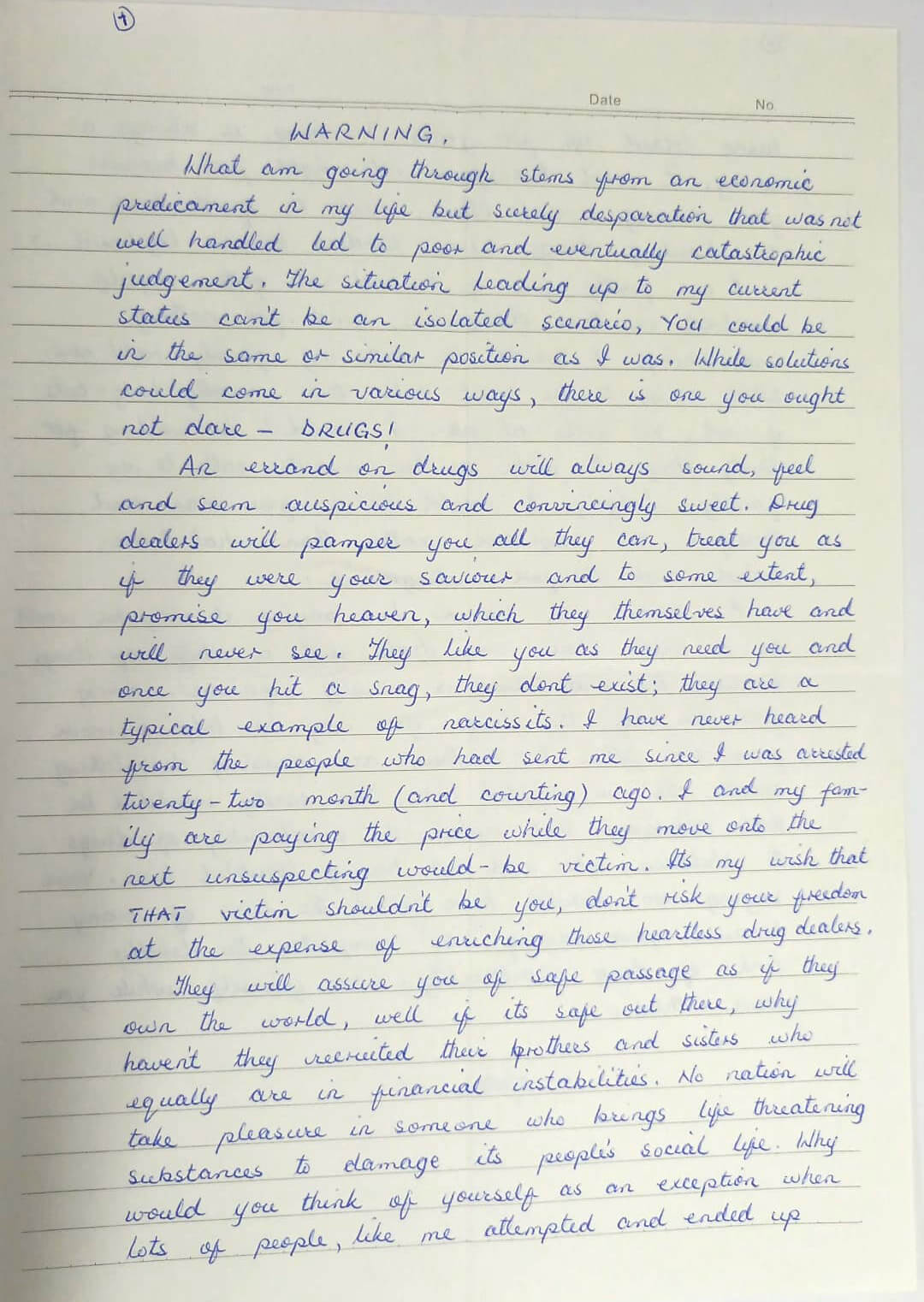
WARNING
What I am going through stems from an economic predicament in my life, but surely desperation that was not well-handled led to poor and eventually catastrophic judgement. The situation leading up to my current status can’t be an isolated scenario; you could be in the same or a similar position as I was. While solutions could come in various ways, there is one you ought not dare—DRUGS!
They like you as long as they need you, but once you hit a snag, they don’t exist;
An errand involving drugs will always sound, feel, and seem auspicious and convincingly sweet. Drug dealers will pamper you all they can, treat you as if they were your saviour, and to some extent, promise you heaven, which they themselves have never seen and will never see. They like you as long as they need you, but once you hit a snag, they don’t exist; they are a typical example of narcissists. I have never heard from the people who sent me since I was arrested twenty-two months (and counting) ago. Me and my family are paying the price while they move onto the next unsuspecting, would-be victim. It’s my wish that THAT victim shouldn’t be you; don’t risk your freedom at the expense of enriching those heartless drug dealers.
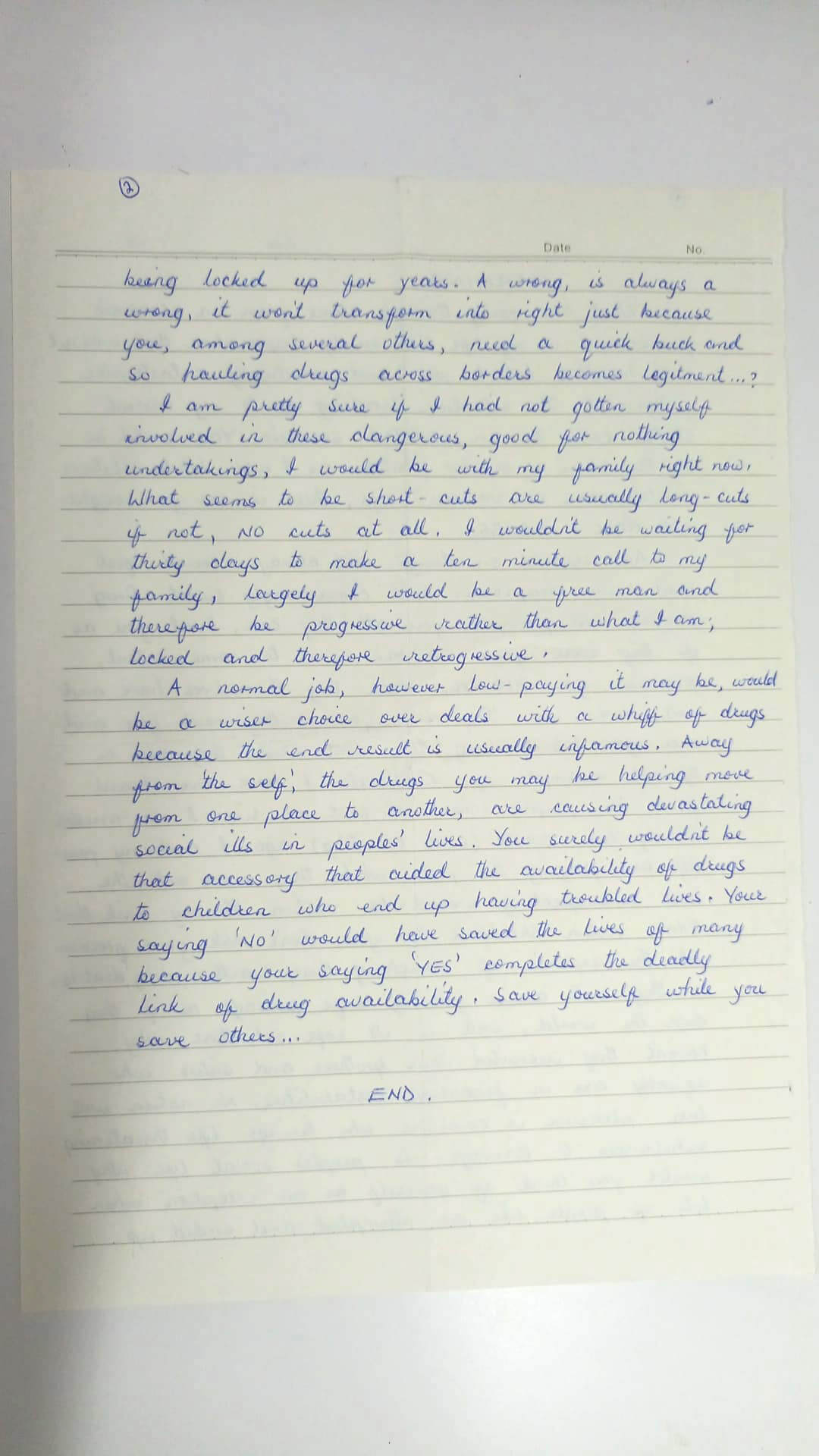
They will assure you of safe passage as if they own the world. Well, if it’s safe out there, why haven’t they recruited their brothers and sisters who equally are in financial instability? No nation will take pleasure in someone who brings life-threatening substances to damage its people’s social life. Why would you think of yourself as an exception when lots of people like me attempted it and ended up being locked up for years? A wrong is always a wrong; it won’t transform into right just because you, among several others, need a quick buck, so hauling drugs across borders becomes legitimate…?
I am pretty sure if I had not gotten myself involved in these dangerous, good-for-nothing undertakings, I would be with my family right now. What seems to be shortcuts are usually long cuts—if not, NO cuts at all. I wouldn’t be waiting thirty days to make a ten-minute call to my family. Largely, I would be a free man and therefore be progressive rather than what I am: locked up and therefore retrogressive.
A normal job, however low-paying it may be, would be a wiser choice over deals with a whiff of drugs, because the end result is usually infamous. Away from “the self,” the drugs you may be helping move from one place to another are causing devastating social ills in people’s lives. You surely wouldn’t want to be that accessory who aided the availability of drugs to children who end up having troubled lives. Your saying “NO” would have saved the lives of many, because your saying “YES” completes the deadly link of drug availability. Save yourself while you save others…